
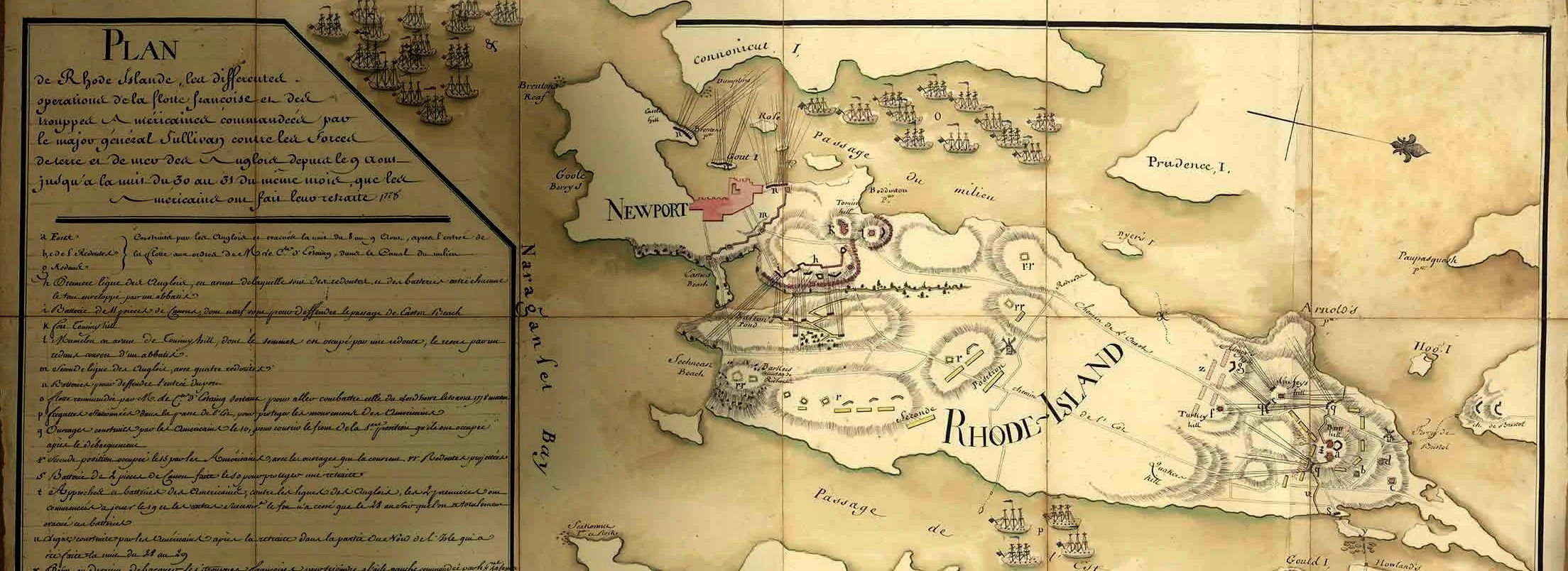
Founded in 1783 by men who, at great personal sacrifice, had secured American independence after a long, bloody war fought against overwhelming odds.
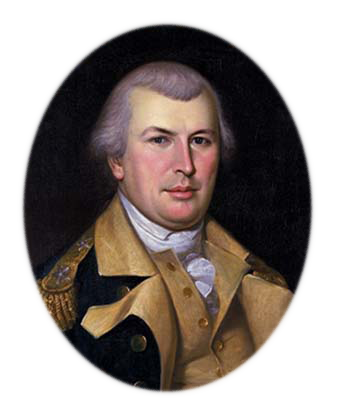
Founder of the RI Chapter
General Nathanael Greene
Stategic Vision
The American Revolution secured our national independence, established our republic, created our national identity, and articulated ideals of liberty, equality, and civic responsibility that continue to shape our nation and inspire the world. The Society of the Cincinnati was founded to perpetuate the memory and enduring principles of that vast event. To fulfill that historic responsibility, the Society created the American Revolution Institute of the Society of the Cincinnati.
The Society carries out its historic mission by:
cultivating reverence for the heroes of the Revolutionary War and brotherly affection among members of the Society;
advocating popular understanding and appreciation of the American Revolution and its heroes;
promoting effective teaching on the American Revolution by producing and distributing curricular materials, supporting educators with enrichment opportunities, and advocating educational reform to restore the American Revolution to its proper place at the center of American history education;
encouraging advanced study and publication on the American Revolution by maintaining and building a leading special collections library, providing stewardship for a unique collection of rare printed and manuscript materials, practical support and recognition to scholars, and electronic access;
presenting exhibitions on the American Revolution and its legacy at Anderson House and elsewhere, drawing on the Society's growing collection of Revolutionary War art and artifacts and its extensive library collections to inspire public interest in the American Revolution;
conducting an expanding program of public lectures and events to focus attention on the American Revolution and its legacy and attract support for the American Revolution Institute;
supporting the preservation and effective interpretation of Revolutionary War battlefields;
welcoming the public to visit our headquarters at Anderson House, where daily tours focus attention on the Revolutionary War and the history of the Society; and
securing support for our cause and our work from members of the Society, Associates of the American Revolution Institute of the Society of the Cincinnati, and all who respect the accomplishments and enduring principles of the American Revolution.
Our Name
The Society of the Cincinnati took its name from the ancient Roman hero Lucius Quinctius Cincinnatus, a hero of the Roman Republic. In the fifth century BC, the Roman Senate called on Cincinnatus to lead the army of the republic against foreign invaders and granted him dictatorial powers to deal with the crisis facing Rome. After leading the army to victory, he resigned his commission, returned power to the Senate, and retired to his farm, refusing rewards for serving the republic. For the classical world, Cincinnatus was the embodiment of civic virtue—characterized by a willingness to sacrifice private interest and private gain for the good of the public.
Cincinnatus and the characteristics he demonstrated—humility, unselfish personal sacrifice, commitment to the public welfare, and the subordination of the military to civilian rule—were admired and emulated by the leaders of the American Revolution. They believed that these characteristics were essential to the survival of republican government. George Washington, who refused to accept a salary for leading the Continental Army and conducted himself with humility and in strict subordination to the will of Congress, was widely celebrated as an American Cincinnatus. The founders of the Society referred to themselves as "Cincinnati"—a plural form of the name Cincinnatus—to indicate their commitment to the virtues of the Roman hero.
The city of Cincinnati, Ohio, also took its name from Cincinnatus and the Society of the Cincinnati. In 1790 Arthur St. Clair, governor of the Northwest Territory (which included present-day Ohio) and president of the State Society of the Cincinnati of Pennsylvania, gave the town its current name. The name Cincinnati honored the Society and its members, who settled in large numbers in the towns of the Northwest Territory.